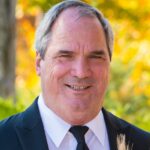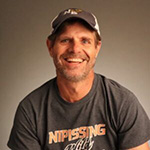
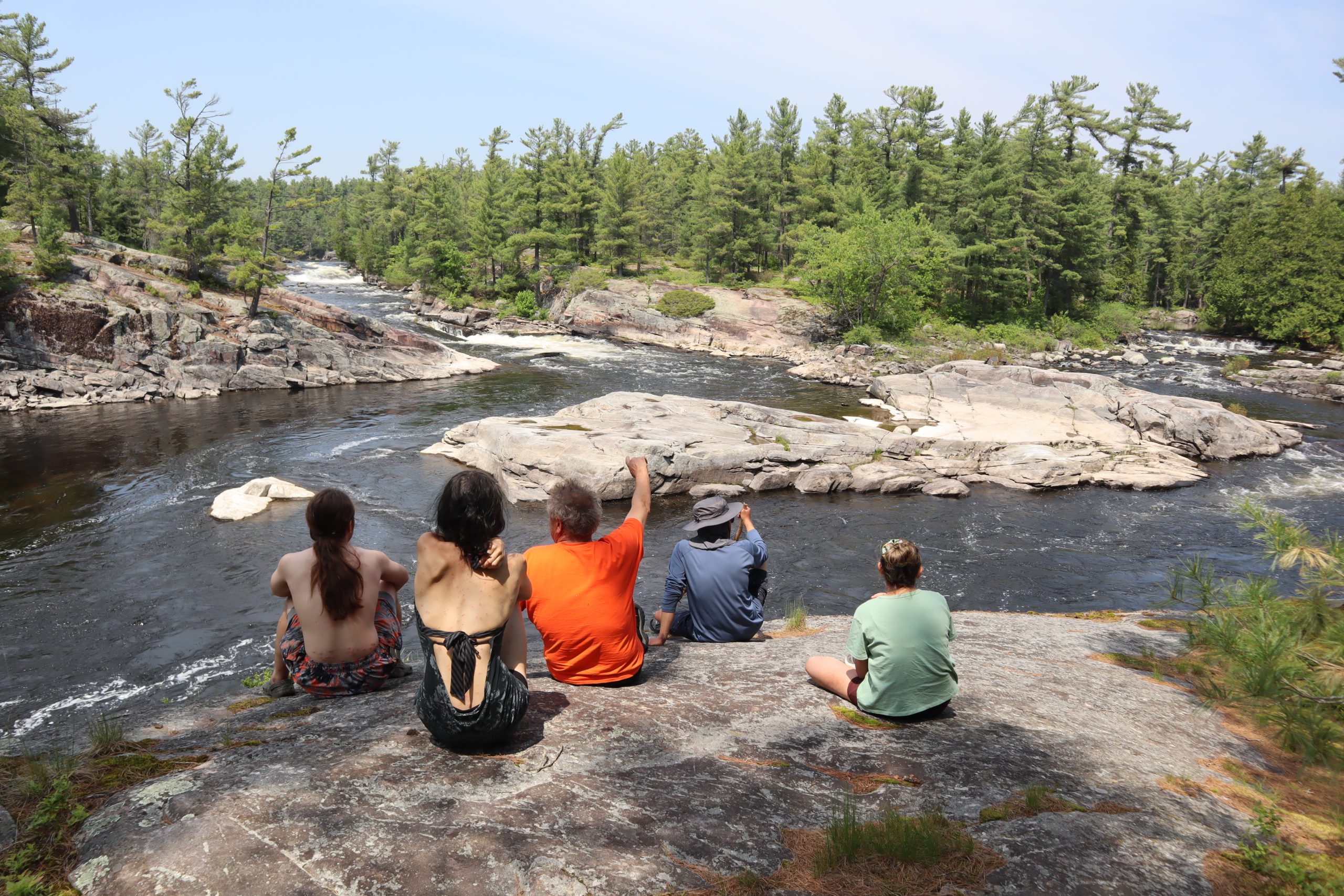
Few family names carry as much history as Dokis — and fewer still owe their origins to a moment of laughter on Georgian Bay. Norm Dokis, a proud member of Dokis First Nation, traces the name back to the community’s founding chief, Michael Eagle Dokis, and a story that blends French-accented enthusiasm with the teasing camaraderie of fur trade country.
The following story comes from the 2023 Small Town Times podcast with Norm at my previous office at 176 Lakeshore, the co-working place made out of the former Tweedsmuir Public School. It was written with the assistance of claude.ai based on the transcript.
Norm: I’m very proud of the name. There’s a lot of history there. It was our founding chief — Chief Michael Eagle — and it was his nickname. He was out guiding on Georgian Bay with Americans, and with his French accent, he’d get excited and start saying, ‘Duckies! Duckies! Duckies!’ They laughed at him and teased him about his accent, basically, and the nickname stuck with him. It morphed into history and the future and everything else.
The name was formalized when Chief Michael Eagle Dokis signed the 1850 Robinson Treaty — a landmark agreement between the Crown and First Nations across the Lake Huron and Lake Superior territories. Norm notes that while some signatories marked the treaty with an ‘x’ or drew a symbol of their clan, Chief Dokis signed his name in full.
Norm: He signed the 1850 treaty as Dokis. Interestingly, what’s notable about the Robinson Treaty is that they were obviously seeking out to have a treaty with the First Nations so they could take resources off the land. Dokis First Nation may never have existed if it wasn’t for Dokis advocating for himself. And he was lucky — his main fur trading partner was Alfred Thompson, who happened to be a lawyer and a judge. When I did my historical research, I could see Alfred Thompson as a witness on the treaty. Dokis had a very powerful ally.
Norm also notes that Michael Eagle Dokis kept a detailed fur trading ledger listing the clan affiliations of those he dealt with — a piece of living history that Norm has shared in community presentations, connecting present generations to the names and symbols of their ancestors.
A Shared Past: Journalism School at Canadore
Norm and host Dave Dale go back further than the podcast. The two first crossed paths in the late 1980s at Canadore College in North Bay, where both were enrolled in journalism — Norm in broadcast, Dave in print. The conversation rekindled memories of a demanding program and the different roads each traveller was at when they arrived.
Dave: I started the year before you in print, because I was 21 in 1986. Then I took a year off and worked in the president’s office, saving up so I could go back the next year. It was a big course and a tough one. A lot of guys had a lot of fun in the first year, but the second year they weeded people out.
Norm: Starting journalism at 17, straight out of high school — that course was one of the hardest things I’d done. You were covering stories where a solid background in economics or political science was necessary from day one.
Norm found his footing when he transitioned into the Arts and Sciences program, where courses in economics and political science sparked a deeper curiosity.
Norm: I excelled in economics and political science — I was really seriously interested in understanding the fundamentals of what’s happening in the world. That’s something you should probably learn before going to journalism school, so you can understand those issues and communicate them more effectively.
For a second interview with Norm Dokis recorded in 2025, see the link below …
Shattered Wrists, Broken Plans: A Traumatic Injury and Long Road Back
In the summer of 2019, a ladder collapse at home left Norm Dokis with both wrists pulverized — not merely fractured, but destroyed. For three to four months, he had the use of neither hand. The experience would test him physically, mentally, and spiritually, and ultimately set him on a path he hadn’t anticipated.
Norm: From my surgeon’s point of view, it wasn’t just a light broken wrist injury — I pulverized both wrists at the same time. So I didn’t have the use of my hands for three or four months. Things like wiping your own bum were impossible. Mentally and physically it was very challenging. Coming out of that, you have a greater appreciation for your hands — for simple things you’d taken for granted all those years.
Pain Management: Turning Away from Opioids
The first challenge was managing the pain. Norm was prescribed oxycontin alongside Tylenol 3s. Having heard the stories about opioid addiction, he made a deliberate choice.
Norm: I took one of the oxys, heard the bad stories about addiction, and my wife and I brought the rest back to the pharmacy where they destroyed it. But I was still on Tylenol 3s, and I was just tired all the time — getting a little bit addicted to the codeine too. My wife was managing the dosage very successfully for me, but it made me want to lay in bed all the time with no ambition.
When his doctor declined to prescribe cannabis — citing insufficient clinical evidence at the time — Norm took matters into his own hands, making his own edibles. The results surprised him.
Norm: I went from being a couch slug to living again. I found myself going from being tired all the time to having great pain management, being creative, and not tired — the exact opposite of what I was going through. I’d walk up and down the hill five times a day, and then I’d carve anything I could get my hands on.
Carving as Therapy
What began as a way to occupy restless hands grew into something more. The act of carving — painful as it was at first — became both physical therapy and creative expression.
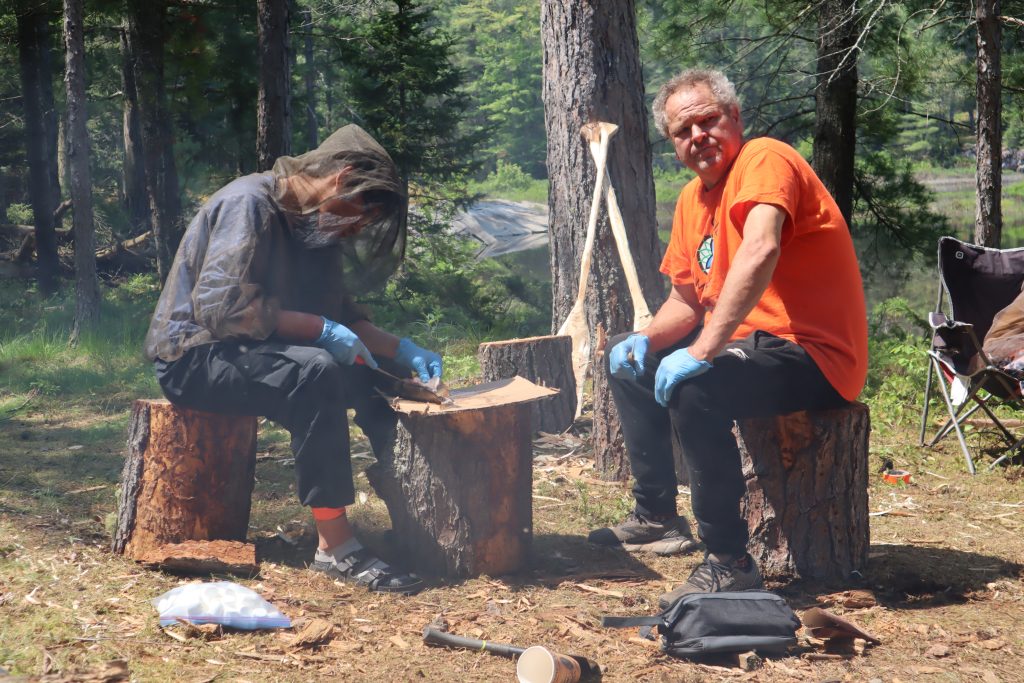
Norm: There was a feeling with the creativity from the cannabis — a desire to move my hands even if it really hurt. What I was doing was good therapy for the hands, the wrists, the arms, everything. And more importantly, mentally I was keeping myself busy. I started turning out little products — paddles, spoons, carved rocks, stones — and next thing I knew I’d developed a big inventory. I also started painting. I did some oil paintings — myself expressing what I was going through, some of the visions from early in the trauma that I was able to paint out.
Three years on, Norm was still carving, still working with his hands — and eventually channelling that work into the community around him.
The Camp: Cultural Roots and Eco-Tourism
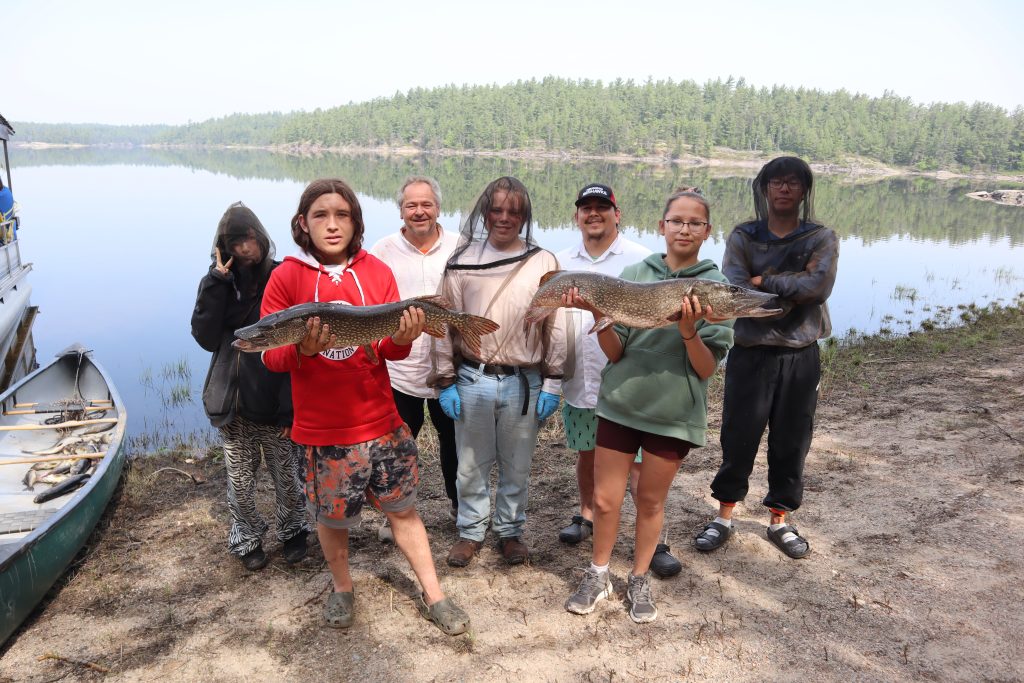
Even during his recovery, Norm refused to step away entirely from the youth camp he ran — a program rooted in cultural and eco-tourism rather than the fishing-focused guiding he’d grown up with at his parents’ tourist camp.
Norm: The injury happened a couple of weeks before we were running the camp — a big youth camp with 36 to 40 people. I couldn’t drive the boat, couldn’t really do anything. But I’d participate and do a couple of teachings here and there, using some of my recent experience. There was a lot of safety one-on-one — ladder safety, for sure.
Norm: I grew up with my parents owning a tourist camp, but it was all about fishing guiding. There was never enough fish — no real appreciation of the nature around you. What I found later in life was how easy life could really be. So doing the cultural and eco-tourism was about walking the trails, talking about how I walked those trails as a kid and all the Indigenous teachings that went along with that. The sleep cabins are replicas of my trap line days — small, bunk-bed shacks like the ones we’d move between in winter. I wanted to hold on to that experience.
The intimacy of those small structures, Norm explains, serves a purpose. Proximity forces connection — you can’t easily retreat from the person sleeping in the bunk above you, or ignore the crackle of a wood stove a metre away.
Norm: On the trap line, I was experimenting with nature, really observing things around me, keeping busy. It gets dark at 4:30 or 5 o’clock and you’re stuck in a shack. One of the things I did was play the radio — picking up WLS out of Chicago on AM. A world away from me, out there in the middle of the bush. I still carry three radios around. People tell me I should go on ‘Alone’ — that I’d win. But I’d suffer from loneliness like a lot of participants do. If I’m going to win that show, I’d bring a radio to counter the loneliness.
Taking Control: Diabetes, the Keto Diet, and Knowing Your Own Body
Beyond the wrist injury, Norm faced another health challenge — test results indicating he was at risk for diabetes. Rather than simply entering the clinic his doctor recommended, he did his own research and made a decisive dietary shift.
Norm: They wanted to put me right away into a diabetes clinic, but I just did my own research. It’s not like you can just say ‘I won’t eat sugar, I’ll eat brown bread and brown rice.’ It’s a big commitment — you have to quit all carbs. For the last three or more years I’ve been keeping under 50 carbs a day, because your body converts them into sugar. My friends had always said, ‘You look at a beer and you gain weight.’ That was a really good indicator that my body processes carbs differently.
His doctor’s response to the results at his next blood test was telling.
Norm: She said, ‘What are you doing? That’s fantastic — keep doing that.’ There was no warning about the keto diet. Whatever you’re doing, just keep doing it, your sugars are way down. It’s mind over matter. Being resourceful and resilient — as Indigenous people, we’ve always done that.
Traditional Food, Fast Food, and Forgotten Knowledge
The conversation turned to the deeper history of diet — and the gap between what Indigenous peoples traditionally ate and what modern life has brought.
Norm: As Indigenous people we picked up a lot of the European diet and made it our own. High fats and high carbs sustained people for a long time, but that’s really not our traditional diet. I heard a great Indigenous speaker once who said, ‘You know what our problem is? We’ve got to get back to fast food.’ Everybody was shocked. Then he said, ‘Deer’s fast, rabbit’s fast, and ducks are fast.’ It’s so true.
Those early European settlers, he notes, were hardly eating well either.
Norm: The voyagers were just barely surviving. That was the only thing they could do — that or join the army, and army guys weren’t fed very well either. There was malnutrition, scurvy, rickets. They were dying young, their teeth were falling out. It was a terrible diet for everybody. Look at the Franklin Expedition in 1849 — what killed everybody there, basically, was the lead in the canned foods. They thought they’d hit the holy grail: ‘Look at this invention!’ But you’d go crazy eating it.
Natural Medicine, the Sixth Sense, and What the Land Provides
Norm’s personal health journey — injury, addiction risk, diabetes, recovery — fed into a broader philosophy about natural medicine, Indigenous knowledge, and the ways modern society has lost touch with the land’s pharmacy.
Norm: When you spend enough time in the bush, your body starts telling you what to eat. When I do dry January or dry February, I’ll almost instinctively make cedar tea — I don’t know why, but I think it’s part of my body’s healing process, getting rid of old toxins. That sixth sense kicks in when you’re in the forest. Pretend you and I, Dave, are out in the forest and have to live there — it won’t take long before we start understanding what to do, because our mind and body will be in sync with the earth around us.
Norm: One of the problems with how people look at our natural medicine is that they think, ‘I’m going to prevent cancer’ or ‘I’m going to prolong my life.’ Our medicines can work that way, but there’s a spiritual element you need to understand and work with. That’s tied to the sixth sense we’ve lost because we’re living in artificial societies — watching infomercials telling us what to consume. The dumbing down of society. And it’s worked pretty well.
The suppression of plant knowledge, Norm argues, is no accident — it’s structural.
Norm: Ask people in our own backyards to name one native spice growing right here. They can’t. That’s counterproductive to the empire and the spice trade. Pharmaceutical capitalist colonial settlers — call it what you want, it’s a machine. The knowledge base that could be available is masked and downplayed by the medicinal industry. We’ve got to start teaching this in schools. I can’t sit back and watch it any longer. If we polled 100 people on the street right now, most couldn’t tell you what those plants are, what those trees are — nothing about the environment. That’s a very sad situation.
Building with Cedar: Natural Materials and the Hospital Project
The creativity sparked during Norm’s recovery didn’t stay on the shelf. What began with carved spoons and paddles grew into larger commissioned work — including a project at the local hospital.
Norm: I started selling my art, and it morphed into different things. I take natural materials and build from them. At the hospital I built picnic tables and benches — not your ordinary Walmart flat-pack kind. I work primarily with cedar. The benches have woodpecker holes in them. The garden shed is insulated with moss — the only thing I had to buy were the screws and nails. The garden beds are all hand-split cedar. When I say handmade, I mean handmade. I try to limit the machinery I use. It’s not about carbon footprint — it’s about authenticity.
That authenticity runs deeper than aesthetics. It’s a statement about materials, corporate dependence, and a wood-culture Norm wishes more people would embrace.
Norm: We’re all surrounded by wood. We need to promote more of a wood culture. What really bothers me is seeing plastic playgrounds — backyard toys that last a year or two before ending up in a landfill. We’ve filled up our landfills with stuff we never needed. I’ve done it myself and I really regret it. Remember in the 80s everything was ‘Think Green’? It was just a marketing ploy — maybe slightly less toxic. Nothing green about it. The corporate world takes these ideas, throws them back at us, and re-feeds them to us.
A Closing Thought: Sharing the Story
As the conversation winds down, Norm reflects on why these stories matter — the injuries, the recoveries, the decisions to go a different way. The thread running through all of it is the same: pay attention, trust your body, and don’t wait for someone else to fix what you can begin to heal yourself.
Dave: If you’ve listened this far and you’ve got a story about how you got over a hard thing and made changes to your life — went a little bit more natural — please share it with us, so that others can see we’re not making it up.
Norm Dokis is a member of Dokis First Nation, an artist, a builder, a camp operator, and a keeper of stories — from the laughter on the French River that gave his family its name, to the quiet teachings of a cedar shed insulated with moss.
— Small Town Times, 2023